
Cell repair and cellular regeneration is an essential process in life. To derive novel therapy options, for example, in tissue engineering, it is necessary to better understand the assosciated mechanisms. We use different light-based techniques to investigate these processes in our group. Additionally, we apply biological methods including cell and bacterial culture or molecular biological techniques. We are a member of the REBIRTH Cluster of Excellence (UNIT 7.7.).
Microscopic and fiber-based imaging
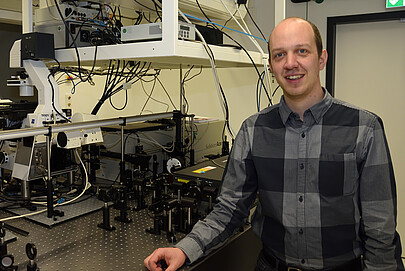
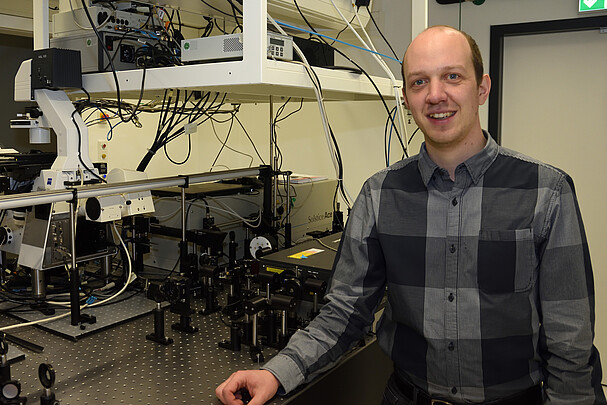
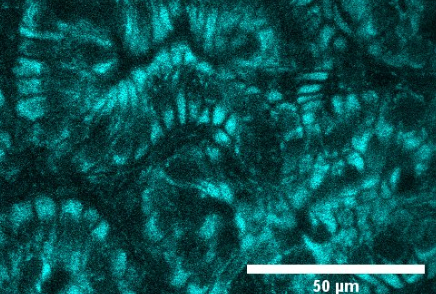
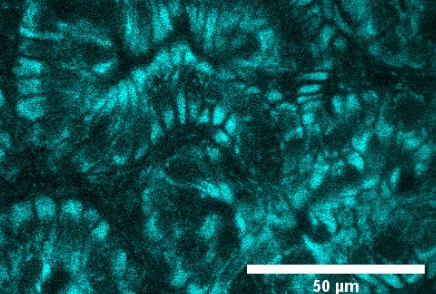
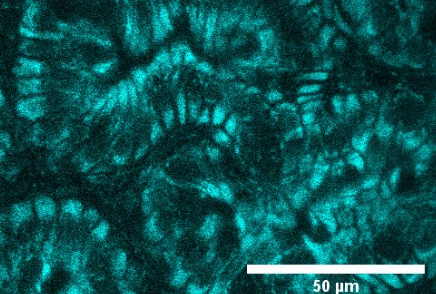
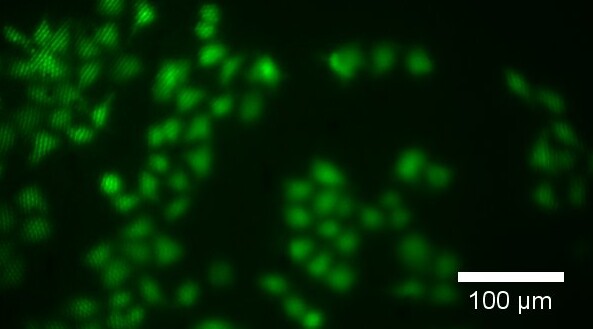
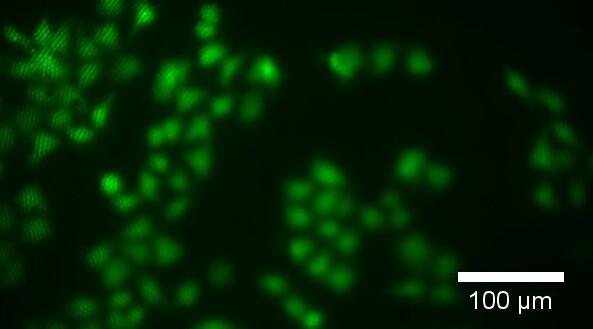
Our group applies different imaging techniques, for example, multiphoton or confocal microscopy, to analyze regeneration processes in in vitro settings like cell culture or in vivo in animal models. This enables us to examine different tissues, to track cells or to measure cellular forces. Additionally, we develop new imaging approaches, for example, by applying fiber-based technologies to allow minimal-invasive imaging, which could lead to a reduction in the number of animal experiments.
Laser-based cell surgery and manipulation
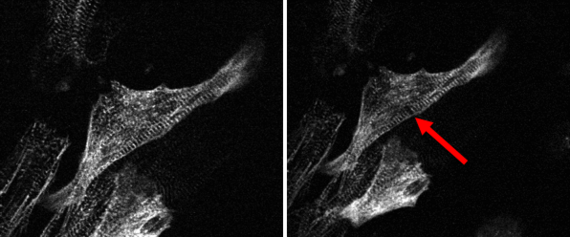
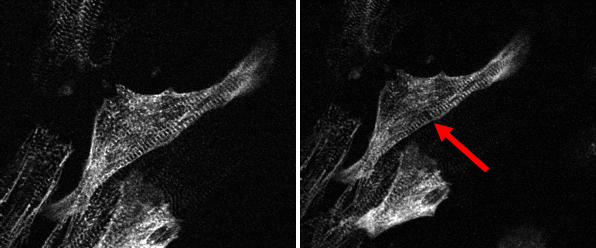
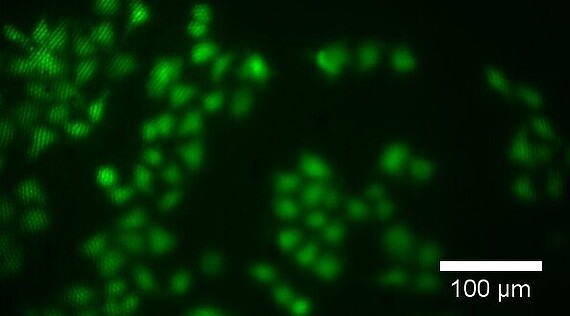
We apply femtosecond-laser systems to mechanically ablate single cells or subcellular structures. The short pulse length avoids heating of the target material and its surrounding, while the induced nonlinear effects enable a precise ablation of biological structures. We use this nanosurgery, for instance, to manipulate elements in muscle cells probing their biophysics and contractility. Additionally, this technique can be used to analyze micro-regeneration processes by ablation of single cells in vitro or in vivo.
Subgroup leader